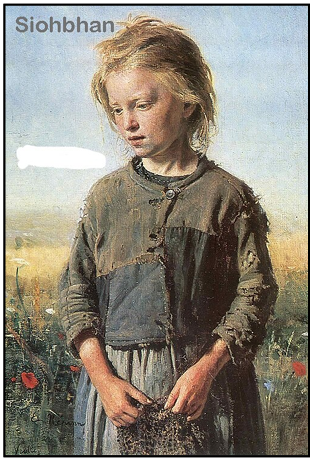
Listen to “Siobhan’s Baby” (Audio Story)
“Mary, Mary, quite contrary, don’t frolic in the waves!
Mary, Mary, quite contrary, don’t gae near the caves!
Don’t work ower hard, you’re juist a child!
Come play wi me, be free an wild!”
Mhairi Cambeul, the poor child, walks along the Singing Sands on the Isle of Eigg in the west of Scotland. She turns her gaze to the rolling waves as the wind temptingly whispers the sea’s sweet longings into her ears. The sea and the wind are eternal lovers, locked in an everlasting embrace, dancing to a primitive music with a rhythm as old as time itself. They are seducers, enticing dreamy-eyed children—such as Mary—to frolic in the froth and foam. On warm, sun-kissed days, they are kind, gentle, and calm. On other days, they turn harsh, brewing tempests and claiming a life or two into the sea’s dark depths to slake their hunger.
Today, the sea is calm. Siobhan, a girl of five—the same age as Mary—tries to coax her to wander from their usual path. Their parents have sent them out to gather berries in the woods and fields, for food is scarce in their little island cottage.
“Please Mary, juist for a short while. Let’s tak a dip an swim for a moment. It’s been sae long syne we did it.”
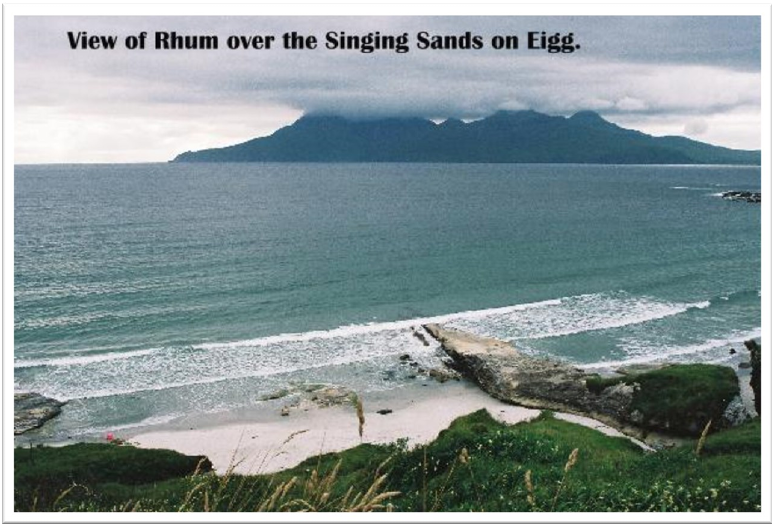
Mary is tempted for a moment; she is just a child, playful by nature, as a child ought to be. She stares longingly at the gentle waves, but seeing a group of local boys her age treading a path to the shore, she stops dead in her tracks. The boys are perennial teasers, and the brunt of their cruelty is often aimed at the girls. The girls always shy away from the shore when those pesky boys are around; it is only in their absence that they dare gather shellfish from the rocks to bring home for dinner. Driven back by the boys’ presence, Mary drags a protesting Siobhan away from the water and into the woods to carry out their task.
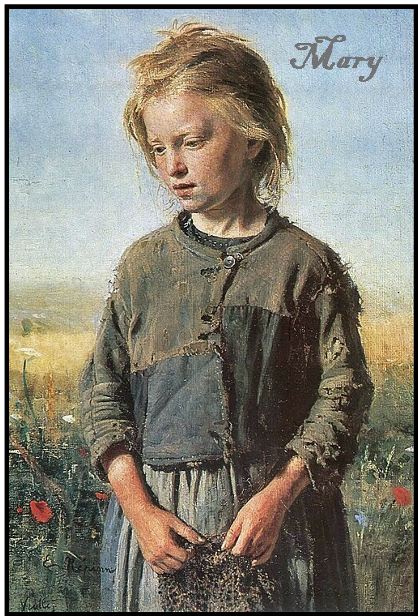
The year is 1893, and food on the island is perilously scarce. Children are often put to work to augment the evening table—combing the beaches for shellfish, scaling the cliffs for bird eggs and chicks, or gathering wild berries. Mary is only five years old, but she possesses a sensitive, old soul. She knows her mother, Morag, adores blackcurrant jam. Yet, because there are so many mouths to feed (Mary being the seventh child in the family), she has noticed her mother eats only a small amount.
Extravagance is a luxury reserved for others, never for them. To make matters worse, her mother has lain bedridden for years, struck down by paralysis, but still able to bear more children.
Despite being paralyzed, her mother is heavy with child yet again; her body is paper-thin around the swelling bulge of her stomach. Mary instinctively knows her mother desperately needs nourishment. Driven by love, the little girl is determined to bring home as many blackcurrants as she can carry, hoping to fill the stomach that feeds both her mother and the coming baby.
Spurred by this purpose, Mary ventures deeper into the woods. Thanks to last night’s heavy rains, the bushes are heavy with fruit, plump and ready to be plucked. Mary’s heart swells with joy, knowing she will return home with a bountiful harvest for her family.
Deep in the shadows, she comes across a fruit bush bearing dark, heavy berries that resemble blackcurrants. “Perhaps last night’s rain produced a different version of the fruit,” she reasons quietly. Unwilling to waste a single berry, she plucks them clean from the twigs.
She reconnects with Siobhan, whose hands are likewise stained and full of fruit. They decide to build a fire to boil some of their haul. Mary has slyly filched a few of her father’s lucifer matches, allowing her to kindle a small flame to keep warm or cook food while foraging across the island.
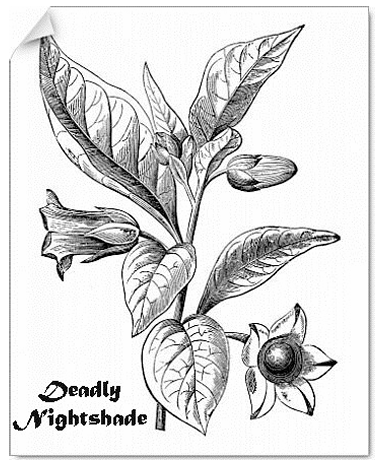
Gathering dry twigs, they build a small fire on the forest floor. Mary carries a treasured piece of an old army mess kit given to her by an uncle who fought in the Crimean War. Filling the small tin pot with water from a nearby beck, she places it over the flames and boils a handful of the berries. Neither child knows that the dark, sweet fruit bubbling in the pot are not blackcurrants at all, but deadly nightshade.
Sated and content, they eat the warm cooked berries and lie back on the lush moss of the wood floor before heading home. But as they rest, a sudden, sharp cramp strikes their bellies. The pain is not a dull ache, but a fierce, tearing agony. Writhing on the forest floor, they stare into each other’s eyes, instinctively realizing that the fruit they just shared was the source of the poison.
Siobhan vomits and falls back onto the earth, pale, shivering, and drenched in sweat. Mary tries to purge her stomach too, but cannot. She collapses beside her friend, her vision glazing over.
“We are no gaun’ae dee, are we?” Siobhan sobs, her small voice thin with agony.
“Na, we are no gaun’ae dee, as I still need tae brin the guid berries tae ma mother,” Mary stammers back softly.
Even as her body burns, a quiet comfort washes over Mary: she is glad that it was “she” who ate the bad berries, and not her beloved mother. She wishes with all her heart that she could carry the good fruit home, but in her soul, she knows it is now impossible.
She closes her eyes for the last time. Yet in her dying mind, she is running home. She bursts through the door, running to her mother’s bed, and places a handful of ripe, sweet berries into her hands. Her mother smiles down at her, glowing with health, and tenderly caresses her hair.
“Guid girl,” her mother whispers in her ear.
The islanders found Mary’s lifeless body the next day. Clutched tightly in her small, cold hands were the deadly belladonna berries, held close against her heart.
Postscript
This story is passed down through oral tradition and is believed to be true. It was told by my grandmother Morag to my mother Rhoda when she was a little girl, serving as a solemn warning to be cautious when picking wild berries. However, no official documentation exists to verify the tragedy; many children died young on the Isle of Eigg during the 1800s, and without a resident doctor on the island, official death certificates often listed vague or misleading causes, such as “died of a severe cold” or “died after a period of sickness.”
Nevertheless, there is every reason to believe the account. My grandmother Morag also told the story of her brother Hugh (Ewen), who died at six years old after falling from the cliffs while harvesting the eggs and chicks (Gaelic: “fachach”) of the Shearwater birds. Hugh’s story has been fully corroborated by official historical records, including a death certificate and medical report (a story I have published under the title “Tales from Eigg”).
My grandmother Morag was born in 1892, the ninth of ten children. She was given the name of an elder sister who had passed away ten years prior, and was also named after her mother, Morag. My mother, Rhoda, was named after her grandfather Ruaridh Cambeul (Roderick Campbell) of Eigg—husband to the elder Morag and father to my grandmother. My grandmother Morag passed away in 1957, when I was eight years old.
Following Ewen’s death, the young Campbell girls continued to roam the island, gathering shellfish along the shore and foraging for berries across the hillsides and woods. In season, they made sweet jam to spread over oatcakes, completely unaware that another hidden tragedy lurked among the island’s wilderness—where deadly nightshade hid in plain sight, masquerading as blackcurrants.
Related Posts
The Cliffhanger
This is a literary version of “The Fall of Ewen.” It is set on the Isle of Eigg, in the…